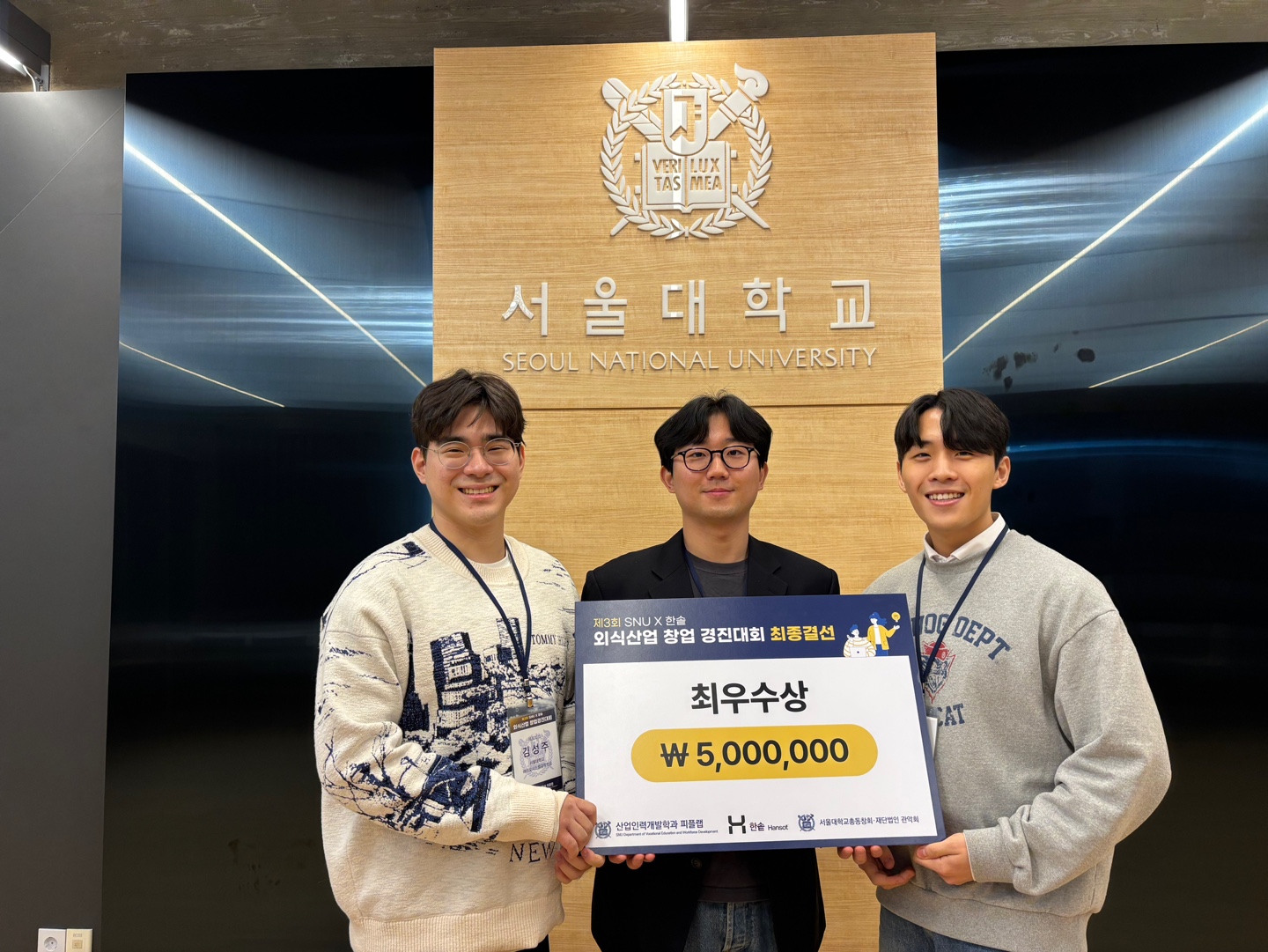
ProductExcellence Award
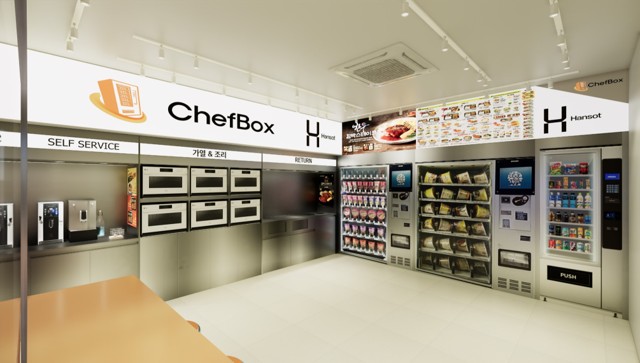
ChefBox
Space-as-a-service for food retail. Subscription-based modular unmanned stores that lower the risk of franchise expansion.
| Role | CFO |
|---|---|
| Context | 3rd SNU × Hansot Food Service Startup Competition |
| Recognition | Excellence Award (최우수상), ₩5M prototype funding |
| Tools | Financial modeling, Market sizing, Business design |
Summary
- Built the P&L and unit economics: a 9-month payback and ~52% operating margin per unit.
- Sized a ₩250B serviceable obtainable market from the convenience-store lunch segment.
- Two-phase roadmap from modular unmanned stores to ChefBox Mini, a robotic cooking vending unit.
Write-up
2 min readChefBox is a subscription service that rents out modular, unmanned stores to food franchises. Our team built the business case for the 3rd SNU × Hansot Food Service Startup Competition. I was CFO: I built the financial model, the unit economics and the market sizing.
The problem
Opening a franchise branch is expensive and hard to undo. It takes a large upfront investment and depends on a location decision made once; if the neighborhood declines, most of that money is lost. Labor makes it worse: 44.6% of restaurant owners report difficulty hiring, which pushes wages up. And when service depends on staff, one poorly run branch can hurt the whole brand.
The idea
Instead of buying or building a store, a franchisee subscribes to a fully equipped modular unit. Units go where demand is and can be moved if a location stops performing, so the location risk is much smaller. The store sells private-brand (PB) and home-meal-replacement (HMR) products from partner franchises such as Hansot, so quality stays consistent without cooks on site.
We planned the rollout in two phases. Phase 1 deploys standard vending-style unmanned stores, where the unmanned store market (70% CAGR) meets convenience food (15% CAGR). Phase 2 adds ChefBox Mini, a robotic vending unit that cooks frozen ingredients on site, so it can serve hot meals 24/7. That cooking capability is what would set ChefBox apart from ordinary vending machines.
The numbers
My job was to show whether a single unit makes money and how large the business could get. Revenue comes from three sources: a recurring subscription fee, a 20% commission on sales, and OEM partnership fees. I built a P&L forecast from operating-cost assumptions and sized the market from the convenience-store lunchbox segment.
| Metric | Value |
|---|---|
| Revenue streams | Subscription fee + 20% sales commission + OEM fees |
| Payback period (per unit) | 9 months |
| Operating margin (per unit) | ~52% (≈ ₩7.8M / month) |
| SOM | ₩250B (10% of the convenience-store lunchbox market) |
| Market growth | Unmanned stores 70% CAGR; convenience food 15% CAGR |
| Hiring difficulty | 44.6% of restaurant owners |
Outcome
The team won a prize at the 3rd SNU × Hansot Food Service Startup Competition and received ₩5,000,000 in funding for prototype development. Industry experts recognized the pitch for how it combined PropTech (modular rental space) with FoodTech (robotic cooking).